
What I do... I do things differently
You might be wondering what I actually do and how I work, and it's a valid question. So let's break it down.
I have three pillars or paths to take:
-
That Therapy - my professional work side
-
The Filthy Fairy's Library - my personal words and diary musings
-
Fairies out Field-Researching - my lived experience, workshops & educational resources gathered in the wild
Each pillar speaks to a different part of my personality, and a different way I can support the people who work with me.
Let's start with That Therapy 🔮😈
It's the best place to begin working with me.
Because ultimately I believe traditional therapy is not enough for most humans, we need more - I know I did. There is absolutely a place for clinical work - but most of us need a toolkit that spans the whole spectrum of our experience, including the emotional, the instinctual, and the embodied. So my work is multifaceted, transient and intuitive. Or simply known colloquially as that therapy.
Because we are more than just minds; we are bodies that feel, creatures with instincts, and souls with stories. Traditional therapy focuses on the thinking mind - on diagnosing and disease - often refusing to acknowledge the ways this dis-ease can be held (and healed) through the body. Because emotion lives in the body healing requires all levels of us to come online.
There is an intrinsic connection between the mind and body - neither ruling the other. As humans we are multifaceted. We are messy, feeling, thinking, speaking animals. I believe we need to address our well-being on multiple layers to be able to live our lives freely and authentically - to embrace our shadows and shame, to chase our pleasure and play. To be wild and emotional and chaotic, as well as organised, structured and intellectual. To learn to look for the glimmers as well as the triggers. To explore our desires as well as boundaries, our inherent silliness as well as our serious. It is in this polarity and spectrum where we can find true self-acceptance. Healing happens when we allow all these parts to exist.
Out in the wild - with the Fairies Field-Researching 🐸🤓
All of my parts, explorations of the world, the modalities I have gathered - this is my lived research.
Because no two people need the same thing, I pull from a range of learnings and adjust intuitively to what works best for you. From psychology, sexual health, pleasure and somatic practices, movement, meditation, massage, embodiment, tantra, energy work, kink and more.
This is my lived experience: my research in the wild, from workshops, shibari performances, equine therapy, retreats, and festivals; volunteering and placements with SECCA, WAAC, the YEP Project; my study of tantra, sexuality, and human embodiment. The spaces where you can find me in the wild, performing, teaching, or collaborating on podcasts. Sharing the experiences that taught me the messy, beautiful, wild truths about desire, connection, play, and the body - the stuff and tools that work. The educational resources and references I have learnt from and gathered on my adventures.
And so from this exploration - I created The Fairy’s Library 🌸📖
My archive of knowledge, my collection of essays and erotic writings, an exploration of pleasure, curiosity, and self-discovery. A living, evolving library: part personal reflection, part educational resource, part erotic, maybe even comedic, storytelling smut.
The Library is where I take what I’ve learned from the world, the body, and the fairies themselves into stories that guide, teach, and inspire. Within it, you’ll potentially even stumble upon my secret dorky diary - for those who want a peek inside the inner workings of a filthy fairy’s mind... of a lil miss lily. The sealed section of a psychosomatic sex nerd. The Library translates what I’ve learned from this world and it's everyday human messiness into stories, reflections, and tools you can use to explore your own inner landscape.

how i work:
theoretically speaking
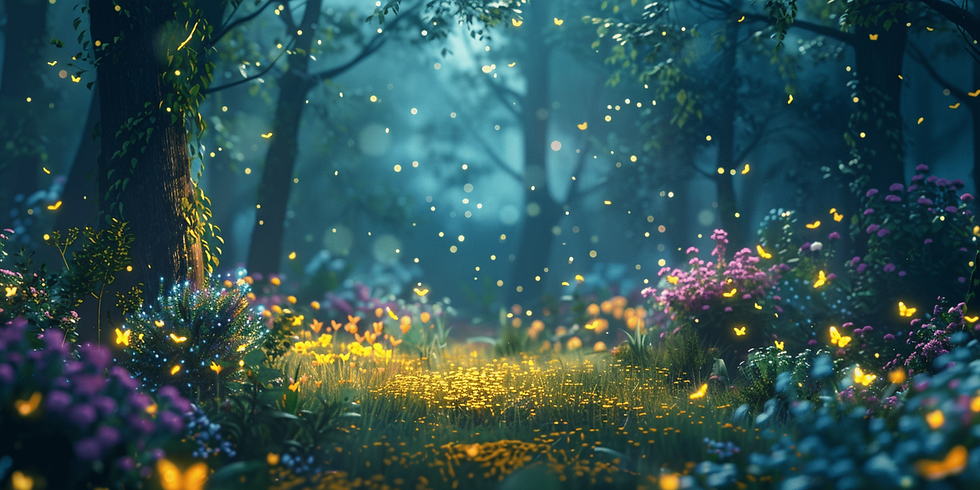
I'm just off with the fairies;
Because fairies are feelings...
Not the winged creatures of storybooks, but a metaphor for the internal landscape of human emotion, desire, and instinct. Some are bold and impossible to ignore — lust, anger, grief. Others are quiet or hidden — fear, longing, wonder. Each one is shaped by biology, culture, personal history, and unconscious patterns. They live in your nervous system — in posture, tension, breath, and habitual thought — and are somatic, psychological, spiritual, and sometimes mischievous.
Fairies can be elemental or appear as archetypes — warriors, priestesses, lovers, mothers, magicians — or as shadow selves, the messy or grief-laden parts we often try to hide. Some are mischievous, flirtatious, scandalous, or glowing with quiet magic. All are welcome. Meeting them, naming them, and learning their language is the pathway to self-awareness and integration.
So why fairies? They help me embrace whimsy, face big feelings, and bring playfulness to serious emotional work. Observing emotions as fairies moves us beyond “good” or “bad” labels, revealing energy, intention, and need — grounded in psychology and somatic science. Interacting with them gives permission to dialogue with the full spectrum of yourself, learning to soothe, excite, and integrate your nervous system.
✨ Talking to your fairies — journaling, reflection, dialogue
✨ Sensing them in the body — breath, posture, tension, pleasure
✨ Engaging them creatively — storytelling, writing, movement, ritual
✨ Integrating lessons into everyday life — boundaries, desire, grief, joy, play
Ultimately, working with fairies is a map for your internal landscape — a way to meet yourself fully, all the bold, quiet, luminous, shadowed, messy, and chaotic parts — and to learn to dance with them rather than fight them.
I work online only for now, until my in-person space is ready. Sooni-ish.
Sessions weave together talk-based, psychological approaches with somatic and body-based practices, drawing on the three layers of you: mind, body, and animal instincts. Maybe a bit of magic too. Because sexuality and humanity don't exist in just one place - but in science and sacred.
I draw from academic theory, lived experience, research, intuition, and the way your fairies (your feelings) show up in the room. Every session is responsive, human, and tailored to the way you show up in your body on that day.
I work with individuals and couples of all genders, orientations, identities, and relationship structures.
People often come to me when they are navigating:
Sexual Challenges
-
vaginismus, vulvodynia, dyspareunia
-
erectile dysfunction or premature ejaculation
-
arousal issues and orgasm difficulties
-
pain, tension, numbness, or shutdown
-
performance anxiety
-
sexual shame or culture conditioning
Pleasure & Embodiment
-
reconnecting with desire after trauma or heartbreak
-
body image challenges
-
building confidence and sexual self-esteem
-
overwhelm - numb, disconnected, frustration, avoidance or
shutdown -
archetypes, shadow work, tantra
-
expanding pleasure, exploring kink, fantasy, or erotic identity
how i work:
realistically
Relationships
-
mismatched desire
-
communication issues
-
rebuilding intimacy
-
navigating polyamory, monogamish dynamics, or complex love
-
exploring queer sexuality and relationships
-
coming back to connection after conflict, rupture, heartbreak or distance
Self-Exploration
-
solo exploration, self-pleasure & mindful masturbation
-
dating, identity transition and single phases
-
attachment patterns
-
queer identity
-
grief, heartbreak, longing
-
building inner safety, learning how to feel again
If you’re human and curious — you’re the right person.
scientific
The scientific study of sex and sexuality. The psychology and biology of pleasure and well-being. The more mental and intellectual.
spiritual
The felt aspect of sex. The soul-deep ecstatic, the ritualistic almost spiritualistic, and the shadows of sex. The emotional and soulful side.
instinctual
The inner-knowing of sex. The individual multifaceted spectrum of experience. The mess of being human. The light and dark. The silly and serious. The playful.

The logical, intellectual mind, the science;
The mind is your narrative-maker, inner philosopher, anxious thinker, and sharp observer. Here we explore stories you tell, patterns you repeat, beliefs inherited, and desires you’re learning to name. Talk-based therapy helps you make sense of experiences, notice triggers, and develop practical tools — an inner landscape map guiding insight and reflection.
This layer draws from:
CBT & ACT, Jungian theory, psychodynamic ideas, humanistic & phenomenological psychology, feminist & queer theory, existential & evolutionary psychology.
Here, you meet your thinking fairies — dramatic, poetic, logical, curious, and overwhelmed parts of yourself.
The emotional and spiritual body, the heart and soul;
Emotions live in the body. Through breathwork, meditation, movement, embodiment exercises, and gentle energy or massage work, we cultivate awareness, release tension, foster safety, and reconnect with sensation and excitement. Here we slow down, listening to breath, posture, tremor, temperature, and impulse — the things your cognitive mind often ignores.
This layer draws from:
Somatic Experiencing, Sensate Therapy, Polyvagal Theory, energy/bodywork, dance/art/play, trauma-informed touch, tantric arts, kink, polarity & power play.
This is where you meet your felt fairies — the tender, the frozen, the fighty/flighty, and the sensual ones just waking up.
The primal animal, the instinctual subconscious;
Beneath stories and sensations lies your instinctual system — older than language, older than societal shame. Desire, fear, grief, play, attachment, aggression, and pleasure all have voices here. This work honors the raw, intuitive, and unspoken parts of yourself.
This layer draws from:
Polyvagal theory, attachment theory, archetypes, embodiment, tantra, shadow work, primal & play theory, parts work, Gottman/Gestalt therapy, kink.
Here, you meet your animal fairies — instinctive protectors, primal lovers, grieving creatures, fierce boundaries, and impulses waiting to be acknowledged.
This is where therapy becomes more than “talking.” Meaning meets embodiment, intellect meets instinct. You don’t have to choose between being rational or emotional, structured or chaotic, soft or fierce — all of your feelings and selves are welcome here.